Saturday, October 9, 2021
Εισαγωγή/ μεθοδολογίες καλλιτεχνικής έρευνας
Εισαγωγή/ μεθοδολογίες καλλιτεχνικής έρευνας
Ειδική βιβλιογραφία, σημειώσεις
Τέχνη στο συγκείμενο (Art in context )
Η σχολή του Slapstick/ Slapstick School
ΑΣΚΤ -Χειμερινό εξάμηνο/ Εαρινό εξάμηνο
Αμφιθέατρο νέας βιβλιοθήκης, Πειραιώς 256
Κωστής Βελώνης
hooks, bell. Teaching to Transgress: Education as a Practice of Freedom, Routledge, Taylor & Francis Group, 1994.
Deines, Stefan. Art in Context. On cultural limits to the understanding, experience and evaluation of works of art in Gimme Shelter: Global Discourses in Aesthetics. (eds.) Jos de Mul and Renée van de Vall, International Yearbook of Aesthetics. Volume 15. Amsterdam: Amsterdam University Press, 2013.
Ζινδρίλη, Πολυξένη. «Η παιδαγωγική αξία του γέλιου στη φιλοσοφία του Henri Bergson», Ελληνική Φιλοσοφική Επιθεώρηση, τόμ. 27, τχ. 81, Σεπτέμβριος 2010 σ. 262-269
Freire, Paulo. Pedagogia da autonomia. Rio de Janeiro: Paz e Terra, 1996. http://www.apeoesp.org.br/sistema/ck/files/4-%20Freire_P_%20Pedagogia%20da%20autonomia.pdf
Freire, Paulo. Pedagogy of the oppressed, μτφρ. Myra Bergman Ramos, εισ. Donaldo Macedo, New York, London : Continuum,
2005https://envs.ucsc.edu/internships/internship-readings/freire-pedagogy-of-the-oppressed.pdf
Fenner, David E.W. Art in Context: Understanding Aesthetic Value, Ohio University Press, 2008
Jimenez, Marc, “Pour une esthétique du risque” , Le risque en art, L’ université des arts ,Séminaire Interarts de Paris 1988-1999, Klincksieck, 2000, 103-113.
. Plasticity and education – an interview with Catherine Malabou, Educational Philosophy and Theory, 53:10, 2021, 1049-1053.
DOI: 10.1080/00131857.2021.1940140
Parry, Idris. Rilke and Things, The Journal of Modern Craft, 7:3, 2014, 287
https://www.tandfonline.com/doi/abs/10.2752/174967714X14111311182848
Rancière, Jacques. Ο αδαής δάσκαλος, πέντε μαθήματα πνευματικής χειραφέτησης, μτφρ. Δάφνη Μπουνάνου, επιμ. Γ. Κουζέλης, εκδ. Νήσος, 2008.
Rilke, Rainer Maria. Γράμματα για τον Cézanne, μτφρ. Κωνσταντίνα Ψαρρού, σημ. Θανάσης Λάμπρου. Αθήνα : Εκδόσεις Ροές, 2000.
Schalansky, Judith. Atlas of Remote Islands: Fifty Islands I Have Never Set Foot On and Never Will is, Hamburg, London : Mare Verlag, Penquin Books, 2009.
Sennett, Richard. The Craftsman, New Haven, London: Yale University Press, 2008.
Smith, Noah, When Disciplines Hit Dead Ends, The Chronicle of Higher Education, August 3, 2021
https://www.chronicle.com/article/when-disciplines-hit-dead-ends
van Alphen E. ‘What History, Whose History, History to What Purpose?’: Notions of History in Art History and Visual Culture Studies. Journal of Visual Culture. 2005;4(2):191-202.
Χριστάκου, Χρύση. Πολιτική και η κρίση των ανθρώπινων δικαιωμάτων στην HannahArendt και τον Jacques Ranciere, διπλωματική εργασία, τμήμα κοινωνικής ανθρωπολογίας και ιστορίας, πρόγραμμα μεταπτυχιακών σπουδών, πανεπιστήμιο Αιγαίου, 2017.
Films
Woody Allen, Annie Hall, Ending Scene, 1977
https://www.youtube.com/watch?v=gT0fe8tmwmo
https://www.sparknotes.com/film/anniehall/quotes/page/5/


Sunday, September 26, 2021
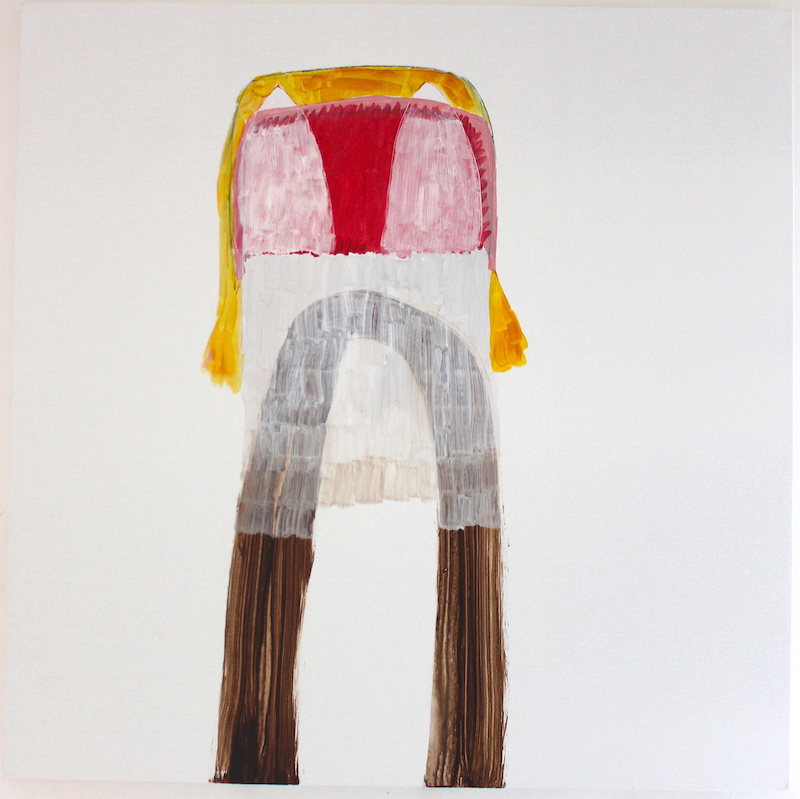
Atlantic Oil
The drunk mechanic is happy to be in the ditch.
From the tavern, five minutes through the dark field
and you’re home. But first, there’s the cool grass
to enjoy, and the mechanic will sleep here till dawn.
A few feet away, the red and black sign that rises
from the field: if you’re too close, you can’t read it,
it’s that big. At this hour, it’s still wet dew.
Later, the streets will cover it with dust, as it covers
the bushes. The mechanic, beneath it, stretches in sleep.
Silence is total. Shortly, in the warmth of the sun,
one car after another will pass, waking the dust.
At the top of the hill they slow down for the curve,
then plunge down the slope. A few of the cars
stop at the garage, in the dust, to drink a few liters.
At this time of the morning, the mechanics, still dazed,
will be sitting on oil drums, waiting for work.
It’s a pleasure to spend the morning sitting in the shade,
where the stink of oil’s cut with the smell of green,
of tobacco, of wine, and where work comes to them,
right to the door. Sometimes it’s even amusing:
peasants’ wives come to scold them, blaming the garage
for the traffic—it frightens the animals and women—
and for making their husbands look sullen: quick trips
down the hill into Turin that lighten their wallets.
Between laughing and selling gas, one of them will pause:
these fields, it’s plain to see, are covered with road dust,
if you try to sit on the grass, it’ll drive you away.
On the hillside, there’s a vineyard he prefers to all others,
and in the end he’ll marry that vineyard and the sweet girl
who comes with it, and he’ll go out in the sun to work,
but now with a hoe, and his neck will turn brown,
and he’ll drink wine pressed on fall evenings from his own grapes.
Cars pass during the night, too, but more quietly,
so quiet the drunk in the ditch hasn’t woken. At night
they don’t raise much dust, and the beams of their headlights,
as they round the curve, reveal in full the sign in the field.
Near dawn, they glide cautiously along, you can’t hear a thing
except maybe the breeze, and from the top of the hill
they disappear into the plain, sinking in shadows.
Cesare Pavese, Disaffections: Complete Poems 1930-1950


Thursday, September 9, 2021
Basics

Lois Weinberger
Brandenburger Tor, 1994
Black-white print, 125 x 150 cm
Lois Weinberger (b. 1947 in Stams, Tyrol) was an early and visionary critic of the upheavals of the Anthropocene and is considered a pioneer of a distinct, artistic ecology. From the 1990s onwards, he played a significant role in shaping the discourse surrounding the relationship between nature and culture. Between ironic shamanism and conceptual but poetic rigor, his works show the limits of human agency and make our superiority over the environment perceptible as an illusion. Weinberger's works challenge our ethical standards with the juxtaposition of the seemingly marginal, useless, and worthless. In doing so, they express with relish an all-encompassing, inescapable cycle of becoming and decaying. Before his death in April 2020, Weinberger designed his show Basics for the interior and exterior of the Belvedere 21. The works from the last few decades will be on view in Vienna for the first time.
Lois Weinberger-Basics, Belvedere21, Vienna
Curated by Severin Dünser.
https://www.belvedere.at/en/lois-weinberger

Monday, August 23, 2021
Elegy and Dissertation
I'd like to shrink nowadays
It's better if one is proactive with
event that happen to him.
The desire for death is a synonym for a willing compromise.
Reducing size is not that bad at all;
one can fit in a baby kangaroo pouch, in a sportbag,
in an urn.
shrinking creates less difficulties for a person.
Though he must gravitate. But chalk that up to
Mr. Newton's account.
Above all and after all
I would rather shrink into myself.
(I throng inside me. I contract.)
No community, no party, no corporation, no caste.
Jst to present myself: what I am, that.
Morevoer: becoming. Be
any side of the dice.
Not a turn, but a twirl.
Be it! Whatever will ber, will be. Prevailing
Gerade-so-Seinemet
I comprehend it as my own subevent.
I'd like to walk
on the "all bodies street" (Gyorgy Petri Boulevard),
beforehand I'd make
a good juicy beefstew,
just to eat a few more gristles and cartilages,
but first buy the ingredients for it
(calf, and maybe heartroot, oxtail)
and then take a walk in this
(perhaps the last)
spring with you, with you, with you
(Da capo el fine).
Gyorgy Petri
Transl. by Michael Castro and Gabor G. Gyukics
Sunday, August 22, 2021
Slapstick and sculpture. Thoughts about the comic syntax of objects
When we look for the word “slapstick” on search engines, we find the following clarification: that it refers to the knockabout farces of American cinema, in which the actors behave foolishly and blunder all the time. Yet there is an element lacking in this general definition, an element that determines the way in which I conceive the presence of slapstick in my own work. The description based on the theatrical tradition of clowns and mummers may seem satisfactory, but gags, false steps and falls are produced by an unexpected “meeting” with objects. My sculptures explore the comic and awkward condition of the object as projection of an anthropocentric narrative with allegories of everydayness and mythological narratives; therefore, it is quite understandable why I find so moving the American burlesque and all its laughter-producing intersections with dominant objects.
“Slapstick” corresponds literally to this test, since it is a device composed of two thin wooden boards that produce the sound of “slap”. Slapstick as an object is used in Commedia dell’arte, when one comedian slaps the other. Here, we cling to the beneficial role of slapstick, a.k.a. batacchio in its original Italian version, in producing with very little force a powerful noise, just like the forceful blow a comic actor would receive without feeling pain. A slapstick gesture-as-narrative might include the notion of a clumsy log, a material that resists and reacts against any attempt at manipulating it, and remains pure in its primitiveness, as in the story of Pinocchio.
In that sense, in the terms of a gag gesture, the awkward relation of action-reaction shared by the clumsy log and the rigid wood with the spectator is completed by Barnet Newman’s seemingly dismissive statement, that “sculpture is what you bump into when you back up to see a painting”. Through this enlarged unity of “Slapstick Acts”, I mean a bare and restless form which participates in the comic plot of the object and into which it is always possible to bump. In this way, bumping becomes the occasion to wonder about the nature of sculpture as an obstacle, as part of an ontology that permits the subject to think. For all that, it would not be impossible to infuse to sculpture the charge of the ephemerous and of momentary pleasure. I notice a constant need for reflectiveness, and at the same time I make a point of annulling it. In the same way, the dominant narrative that preoccupies me is the gap produced by daydreaming and its frustration by reality.
My sculptures also fuel a series of paintings in which there is an evident gestural dimension that starts with the erection of the line and moves downward, displaying the instability and the fragility of writing. In my three-dimensional constructions too, there is a fragile balance with the sense of an imminent breakdown of the materials.
Quite often I notice the transcription of the process of an incomplete identity, of a clumsy construction, and in any case whatever perfection there is tends to be combined with an underlined incongruent point in the whole synthesis. It may be an irregular shape, a bump, symbolically equivalent to the idea of an incomplete sphere, as suggested by the etymology of “Clown”, clot + clod. I conceive Slapstick as a study on the moral consequences of error and clumsiness, a study that incorporates a tradition of non-conventional spirituality with the natural, material, and physical breakdown of the religious subject. This condition may justify why slapstick is laid bare and does not disguise itself.
Kostis Velonis
To Do Without So Much Mythology

The Dream Machine, 2021
Acrylic, oil, pastel and pencil on canvas
100 x 100 cm
Picture a live comedy show. A routine, as they call it. Picture it starting with a widely recognisable pre-show tune. Something hummable. Somet-hing you’ve definitely heard before even though you might not recall the name of the singer. Then: a woman or a man appears on stage. The music swiftly changes for a much more upbeat song, almost danceable. The wo-man or the man walks the whole stage, emphatically waving and hailing while the audience is clapping hysterically. She or he reaches a mic on a mic stand. Hello everyone... thank you for coming. Or better: Hello Vien-na! Or again: Vienna, how you doing? Travelling through the mic, hers or his voice is blasting through the whole auditorium, the rejoicing audien-ce greeting back with all they have. And that’s how it starts. That’s how it should start. Every time. Always. Because a comedy show is nothing but a ritual. All based on an unspoken contract, a pre-rational agreement between a speaker and a listener. The whole point being: to surprise, fa-scinate, scare, excite, emotionally transport or simply amuse, we need a shared grammar. We need a ceremony of sorts. A liturgical harmony. Hello everyone and thank you for coming. Clap. Hello Vienna! Clap. Only at this point the contract is signed and we are all in it together. The woman or the man as well as the audience. Us. All accomplices. And yes, I agree, it would be better to do without so much mythology, but that’s not how things work. You and I both know that’s not how it works. So what has all this to do with art? I have no idea... but I bet a lot. Comedy as a perfect case study. Comedy as a product of human imagination that follows a different path than that of conscious, logical thinking. Because like myth, also comedy is a way to tell stories and, at the same time, a lens to read oneself and the reality as a whole... to give or take away meanings, anxieties, joys or sorrows. It is an organisational tool. So why not look at the comic (and its counterpart, the tragic) as another category of that mythical thinking that dominated human behaviour for centuries.
Myth as a knowledge that is already sovereign in itself, that does not need or even tolerate any further developments. Myth as a construction made up of variations, alteration of the same.
Above all, myth as a “thinking in images”, a parallel form of knowledge. With the arrival of modernity and scientific thinking, the myth had to mig- rate into the peripheries of storytelling... into the curious, the weird, even the morbid. And nowadays a potential residue of mythical thinking might be found in that suspension of logic underlining our relationship to the comic and the tragic... two fields where feelings, habits and archetypes dominate as moulding forces.
Again: what has all this to do with art? A lot. That’s why here you’ve got two shows. Two exhibitions running parallel to each other. One visible (with works by 5 artists: Beth Collar, Simon Dybbroe Møller, Sophie Jung, Lukas Thaler, Kostis Velonis), the other invisible (with spoken pieces by writers and artists Bob Kil, Paul Becker, Holly Pester, Luis Felipe Fabre, Sarah Tripp). The first show is silent, the second spoken. One exhibition becomes the shadow of the other, and yet they are both completely in- terchangeable. Like the two sidesof the same coin, like comedy and tra- gedy existing together, only together. Silent objects and bodiless words, both treating the idea of the comic as a mythological category of thinking, something that is all praxis, pre-reasoning, no real separation between concept and object. And yet everything here exists only thanks to an ag- reement between the two parts, between what is left there to be seen and who sees it.
I have no real answer. I don’t exactly know what all this has to do with art. And I guess that’s the show.
Text by Francesco Pedraglio
Artists: Beth Collar, Simon Dybbroe Møller, Sophie Jung, Lukas Thaler, Kostis Velonis and spoken works by Bob Kil, Paul Becker, Holly Pester, Luis Felipe Fabre, Sarah Tripp
Curator : Francesco Pedraglio
Galerie Martin Janda
Where This Essay is Going is Anyone's Guess.
If a woman gets nervous,
she'll eat or go shopping.
A man will attack a country–
It's a whole other way of thinking
Elayne Boosler,
quoted in In Stitches 1991
Fainting Perimeters: Carnival comedy is
inextricably linked with tragedy.
Satin-masked Michael Jackson dangled his son over a balcony in Berlin's Hotel Adlon in a beautifully archaic, near-mythic moment in 2002 to some outraged people, others in hysterics, a few mildly amused, and several who got back to their laundry —an artwork so convolutedly funny and menacing, it should've been bought by MoMa years ago. Further dangled over the railing that day—aside from intelligibility— was the shapeshifting nature of carnival comedy, temporary humor that escapes consequences, creates consequences, a vitiligo pendulum that blurs and disorients our psychological orientation: borderline- splitting, a heroic dimension, the liberating deliverance of Otherness, homeopathic doses of glitter- baroque enlightenment. Carnival comedy and its philosophical tenets are inextricably linked with tragedy: it gives us an occasion, a license to look and act differently, to be out of control, zany, to be frightened or frightening. It rejects and embraces tragedy simultaneously. Comedy that is always becoming,
The concepts of carnival—masks, floats, freaks, inversion, otherness— form a shell to inspect blurred lines: tragedy becoming comedy, comedy becoming tragedy, a dismantling of hierarchies—gloomy-gay imaginings of offhand comedic maelstroms and ultraviolet mental alibis. Carnival is a short-lived parody that lives in constant relation to tragedy: a very effective political tool. Singular narratives are interrupted, systems of exchange are fluid, circulation is privileged over stasis: a lyrical comedic libido and the aphrodisiac that comes with a healthy disdain for political correctness. Satire is a way of dismantling the house, without having to go to jail for it.
Caramel Dionysia:
Tragedy becomes comedy.
Dionysia Carnival (5th Century Greece) originated as six days of madness, humor, freaks, masks, distortion, a petri-dish thematic that floodlights human behavior. Peter Stallybrass and Allon White describe funfairs as a loose amalgam of procession, feasting, competition, games, and spectacle, through which all our ideas of freaky, abhorrence, shell-colored sanguinity and comedy are purged or teased out. 1 Which is to say, what is considered tragic, unthinkable, perverse is inverted— albeit momentarily. Step right up, ladies and gentlemen! Russian Eeyore theorist Mikhail Bakhtin’s Ferris-wheel theories of carnivalesque pirouette alongside his theory of the shifting nature of language, which he called dialogical.2 Left, perhaps, with a bad taste in his mouth after the Stalin purges suppressed his work, Bakhtin's dialogical seemed hellbent on dismantling a singular, authoritative interpretation of ideas. Indigenous to a Bakhtinian carnivalesque is pervasive, debatable laughter and its intrinsic democratic nature. On Eeyore's carousel, disparate elements mix in wild abandon, confound class, hierarchies, social positions, propriety— a 'festive critique,' a vague nebulous, reconfiguring the world through laughter. Abject categories of class are abolished, status obliterated: carnival liberates through rejection. She turns what’s shameful into a comedic coup. Also flagging the blurred lines of the funfair, Robert Stam notes: In carnival, all that is marginalized and excluded-the mad, the scandalous, the aleatory-takes over the center in a liberating explosion of otherness. The principle of material body-hunger, thirst, defecation, copulation-becomes a positively corrosive force, and festive laughter enjoys symbolic victory over death, over all that is held sacred, over all that oppresses and restricts.3
Here we are together, building on a new wing for the mistress. The effect of carnivalesque is no less than a revolution.
Coney Island Baby:
Tragedy or comedy.
In the hands of Lady Carnival, appetites for fluctuant comedy are whetted, a yearning to cross-dress ways of acceptability, to provide a questionable, inexpensive tasting menu for political incorrectness, to laugh at others as a way of laughing at ourselves— or perhaps the inverse. Ourselves show up in all sorts of ways. A spontaneous trip to Coney Island or Sydney's Mardi Gras or the Greenwich Village Halloween Parade continues the ooze of narcoleptic desuetude in comedic theatricality, placing masks and freaks and drag queens and clowns on homemade floats–but not a pedestal. Blow-up sex dolls resembling politicians being fucked up the ass float on clouds, fairies eat rosé fairy floss, quotes we’re not sure are real or speculative fiction spelled out in pink-azure crêpe-paper, a quadrupled heteroglossia: I just received a beautiful letter from Kim Jong-un. (Donald Trump, 2019). Did he really say that? (The answer is usually yes).
The carnival float is a mobile and hybrid creature, disproportionate, exorbitant, outgrowing all limits, obscenely de-centered and off-balance, a figural and symbolic resource for parodic exaggeration and inversion.4 We laugh at the unfuckable Elephant Man, jaundiced Frankenstein, hyperpigmented Michael, the congenital disfigurements of Phantom of the Opera: conditions considered tragic outside of carnival. We’re unrepentant. It's Lady Carnival who purchases a papier-mâché music box, replaces the ballerina with a horny, geriatric pregnant woman, or fully grown adults on the helter-skelter in the last vestiges of dignity. Nothing is beneath her.
Freud's really bullshit ideas about hysterical women (Studies of Hysteria 1895)5 are, unfortunately, a worthy resemblance of carnival comedy-madness. Hysterical infusions of eating inversion, dirt, mess, bouffons, poor impulse control, certainly repressed and sublimated desires and terrors erupted into the extreme bodily attenuations and pantomimed gestures of the hysterical body, whose rigidly stylized postures referred to the impulses, pleasures, and excesses it was not free to indulge in.6 Comedy that transcends what is appropriate, transforms shock and injury into sitcom: a symbolic confetti-obfuscation of humor. And we love it; we just don't want anyone to know we do.
Speak No More:
Comedy becomes tragedy.
A group of thespians continues the chaotic theatrical excess in a site-specific punchdrunk rendition of Macbeth in a five-story abandoned warehouse in downtown Chelsea. The Mckittrick Hotel transforms the play into a speakeasy film-noir where audience members roam the ghostly corridors wearing white Phantom of the Opera masks. Behind the mask, silence is demanded at all times. There must be, it seems to me, a psychological drive to create comedic worlds which serves to break up orientations, to weaken and frustrate the tyrannous drive to order, to prepare the individual to observe what the orientation tells him is irrelevant, but what may very well be relevant.7 A show deemed ‘participatory,’ so long as you don’t speak, but I’m not sure that’s relevant? Whatever, it’s a wager people are willing to take.
The downstairs bodega hosts infinite pre-curtain, shitty first dates (I would know) before diving into the enlightenment of the sideshow in comical white guise— concealment, nuit blanche cover-up, a psychedelic camouflage. Nervous laughter is unavoidable. A fussy Rococo sonnet of political ambition's psychological effects on those who seek power for its own sake, starring a nervous, silenced, suicidal heroine— the usual markings of misogynistic attitudes. Tragic blood-on-her-hands Lady Macbeth gags the audience in ironic projection: it’s all very Fassbinder. Comedy that obscures tragedy and disorients just enough for us to forget the story is, in actuality, horribly prejudiced—an irony with consequences, without consequences. Our masks reveal a scarlet air of inattention, an inadequate (fortunately) knowledge of Shakespeare, a fact we’d never admit but probably couldn’t anyway behind helium-esque hyperventilation. Lady Macbeth has the last laugh—she who laughs lasts, I guess.
But at least we get laid.
Four Seasons Hotel:
Tragic metamorphosis;
Meme generators met their match on the 7th of November 2020 in a tacky asphalt car park in northeast Philadelphia. Mistaking it for Four Seasons 5-star hotel, the Trump administration booked Four Seasons Total Landscaping for their re-election campaign press conference. A hilarious happenstance between Donald Trump and Associated Press, triangulated by the blue-neon sign of an overworked sex shop and a very competitive crematorium: the odds of a resurrection were most definitely in the crematorium's favor. It smacks of jealousy. Trump and Giuliani's sweaty parking-lot electoral race to the end is history's undisputed winner for comedy, even before absentee counts. Donald’s chemistry with Kim Jung-un, fake tan, and the people of ‘Nambia’cresendoed in an uproarious (high art) prosthetic-aesthetic, built on the back of what is tragic. Laughing is a very serious thing. Healthy defense mechanisms and admissions not being Trump’s strong suit, he responded just relax; it was intentional.
You relax; you’re the dead guy. (Whoopi Goldberg, Ghost)
A tar garden of death-drive flowers, meme-busters, carcinogenic hand sanitizer, landscaping a springtime space where people misbehaving has been raised to a high art form— a fiasco sans mask.
Beyond bourgeois hysteria, satirical regicides, and rubber vampire teeth, carnival comedy rejects and co- exists with tragedy. In the very least, it’s a break from the daily grind. The masks of Dionysus, of New York’s Speak No More, of Coney Island clowns are temporal spaces, ephemeral role reversals unrecognizable today. Carnival pours onto the floor yet another configuration, no longer relegated to six- day festivals or Thanksgiving long weekend. Her out-of-bounds attributes, unending metamorphosis, and slippery aesthetic invert and congeals in a carnival of sinister profusion: quotidian Covid. Again, the pendulum swings, carnival splinters and mutates before our very eyes, the temporary becomes perpetual perversion: our FFP masks of milky ubiquity, a symbolic reminder of the shape-shifting nature of carnival comedy. Lines are vague, reversed, inert, unresolved; a rainbow archway prolonged. Comedy and tragedy arm-in-arm.
Lady Carnival is the prodigal son who returned and outstayed his welcome.
Where this comedy is going is anyone's guess.
LOL
Essay by Estelle Hoy
1 Peter Stallybrass and Allon White, The Politics and Poetics of Transgression (Ithaca, NY: Cornell University Press, 1896), 178, 189.
2 David H. Richter, The Critical Tradition, ed. (New York: St Martin’s Press, 1989), 725.
3 Robert Stam, Subversive Pleasures: Bakhtin, Cultural Criticism, and Film (Baltimore: Johns Hopkins University Press, 1989), 86.
4 Stallybrass and White, Transgression, 9.
5 Sigmund Freud, Studies of Hysteria (London: Hogarth Press edition, 1955).
6 See Stallybrass and White, Bourgeois Hysteria and the Carnivalesque, in idem, Transgression, 171-90.
7 Marcia Tucker, Morse Peckham, Man’s Rage for Chaos (1965), in idem, Out Of Bounds (New York: Getty Publications, 2019), 85.
Friday, August 20, 2021
The Indiscipline of Sculpture

Venus Freethenipple, 2017. Papier Mache and polystyrene, 176 x 116 x 100 cm.
This is the first solo exhibition held in a Brazilian museum dedicated to the work of Erika Verzutti (São Paulo, 1971). Verzutti is a key artist for understanding the practice of sculpture today, in Brazil and internationally. Her thought-provoking forms explore new possibilities for the medium, vis-à-vis the origins and materiality of sculpture, as well as its formal intelligence.
Using a variety of materials, including bronze, concrete, stone and papier-mâché, Verzutti’s works are sensual and tactile, coarse and refined. At the turn of the century, the artist began to produce sculptures in series, grouped into distinct families of “swans,” “Tarsilas,” “jackfruits” and “cemeteries,” among others. The exhibition presents examples of works from all these families, suggesting multiple connections and dialogues between them. The artist’s most recent production is also included: “wall reliefs,” works that blend painting and sculpture and reference the history of art as well as everyday life in a novel way.
Verzutti’s references include books on art and social history, elements of flora and fauna, images in circulation in social networks and the media, evoking animals and plants, landscapes and minerals, everyday objects and art itself—by artists such as Tarsila do Amaral (1886–1973), Constantin Brancusi (1876–1957), René Magritte (1898–1967), Piero Manzoni (1933–1966), and many others. With their unusual character, the sculptures lend themselves to the unpredictable, at times with an element of humor, refusing to accept established definitions or traditions—hence the subtitle for this exhibition: The Indiscipline of Sculpture.
The exhibition is divided into seven sections, based on concepts from philosophy, psychoanalysis, popular culture and art history that relate in a poetic and critical manner to the artist’s oeuvre. The sections connect the works in multiple ways, according to their shapes, materials, themes and chronologies: “Becoming-Animal,” “Tropical Pathway,” “World Metaphor,” “Totemize the Taboo,” “Wild Modernism,” “Under Tarsila’s Sun (and Other Stories),” and “Strangely Familiar.”
Erika Verzutti: The Indiscipline of Sculpture is curated by Adriano Pedrosa, artistic director, and André Mesquita, curator, MASP. It includes works spanning from 2003 to 2021, including a new sculpture created especially for the occasion. The exhibition is part of the biennium of programming for 2021–22 dedicated to Brazilian Histories at MASP, and in this first year dedicated exclusively to female artists.
Erika Verzutti
The Indiscipline of Sculpture
July 2–October 31, 2021
MASP - Museu de Arte de São Paulo Assis Chateaubriand