
Thursday, July 30, 2020
Dewlen House
Bruce Alonzo Goff (American, 1904-1982). Twelve Dewlen House Architectural Renderings, 1956. Print with handcoloring


Tuesday, July 28, 2020

Thursday, July 23, 2020
199

199, Hydra Slaughterhouse until November 1
Deste Foundation/ National Historical Museum of Athens
#funerary #masks #destefoundation#nhmuseumofathens #collection #brass#sculpture #kostisvelonis #fighters#greekrevolution #filikietairia #hydra #199 — at Hydra Island Greece.
Deste Foundation/ National Historical Museum of Athens
#funerary #masks #destefoundation#nhmuseumofathens #collection #brass#sculpture #kostisvelonis #fighters#greekrevolution #filikietairia #hydra #199 — at Hydra Island Greece.
Ghost Beggar Catalogue

#ghost #beggar #exhibition #catalogue published by #fauxeditions#kalfayangalleries and designed by #sevastianakonstaki including e-correspondances with #efiefalida #kostisvelonis @falida @sevastiana.konstaki @kalfayangalleries
Stormy Seas (Sleeping Island)

Stormy Seas (Sleeping Island) 2020
Oil, acrylic, pastel and colour pencil on paper
TAR exhibition
19/7- 29/8
Cur. by @danai_giannoglou
#drawing #tryfonartresidency #kostisvelonis#sleeping #island #stormyseas #koufonisia
Oil, acrylic, pastel and colour pencil on paper
TAR exhibition
19/7- 29/8
Cur. by @danai_giannoglou
#drawing #tryfonartresidency #kostisvelonis#sleeping #island #stormyseas #koufonisia
Monday, July 13, 2020

Saturday, July 11, 2020
Indestructible (Broken)

Indestructible (Broken), 2020
Marble, wood, stones
199
27.6.2020-1.11.2020
Deste Foundation Project Space, Slaughterhouse, Hydra
#destefoundation #gravity #masonry #debate#sculpture #kostisvelonis #hydra #indestructible#marble #stones #transfiguration #boecklin#petrification #solidity #instability#hydraslaughterhouse #exhibition #199 — in Hydra, Greece.
Arnold Böcklin – Isle of the Dead
The title of this painting was apparently coined by the art dealer, while the artist himself referred to the painting only as “a picture for dreaming over”. A fascinating detail to be aware of because the morbid and mysterious allure of the painting lies half in its symbolist-laden title. I didn’t know for the painting before I discovered Rachmaninov’s composition of the same name a few years ago. The title is bewitching, and yet the painting itself looks like the world of nightmares which I inhabit in my slumber. I am drawn and repulsed by it, I fear being engulfed in its darkness, and yet I crave to unravel the mystery of those tall cypress trees.

Arnold Böcklin, Isle of the Dead, ‘Basel’ version, 1880
“Under ancient cypress trees, weeping dreams are harvested from sleep.” (Georg Trakl, tr. by Jay Hopler, from “Year,” published c. October 1912)
The painting shows a seemingly uninhabited little island, composed from strange massive yellowish rocks and built in classical style architecture, the purpose of which is unclear. The centre of the isle is occupied by tall and shadowy cypress trees which look, to me, as if they are corpses standing upright and decaying slowly. Their darkness exudes a nauseating scent and the way they loom over the isle silently gives their presence an ominous character. This is a place from the artist’s imagination, and all elements are subordinated to the mood which is one of dreams and death, some even say the mood is that of ‘withdrawal, of rejection of reality’ which makes sense in the context of Symbolism. Death dreamily hangs over the isle as a dark cloud heavy from rain; death hides in the soft trembling of the tired cypress trees; death lingers in the air in the rich and heavy scent of the Mediterranean. But the isle is not alone; a little rowboat is slowly gliding through the dark and still waters. On the boat we see an oarsman, a figure shrouded in white veils, resembling a statue or a mummy, and a coffin. Now, just when you thought things couldn’t get more symbolist if they wanted to! There are dozens of interpretations of this painting and its every detail offers many explanations. Some suggest the oarsman represents Charon, the boatman from Greek mythology who led souls to the underworld over the river Acheron. Perhaps defining the painting would mean stealing its richness of vague dreaminess and confining it to the genre of mythological scenes, and it’s much richer than that because its layers and layers of mystery serve to awaken the subconsciousness.

Island of Saint George
This painting is one of three versions or variations of a same theme that Böcklin painted. Even though the isle is the artist’s little fantasy, a dream-world and not a real place, it was inspired by a real place, and again, there are a few possibilities. One of them points to the islet called “Sveti Đorđe” (“Island of Saint George”) in Bay of Kotor in Montenegro. The only building on the islet is a Benedictine monastery from the 12th century and the abundance of tall and dark cypress trees are reminiscent of Böcklin’s paintings. It really is a dead isle; no one lives there apart from the wandering souls of the dead, and tourists are not allowed. Böcklin could have seen the islet on one of his travels to Italy. I am certain that in twilight it holds the same eerie spell on the observer as the isle in the painting does. Another possible inspiration is the Pontikonisi islet in Greece, again with plenty of cypress trees and a Byzantine chapel from the 12th century. I personally feel that there is a clear resemblance between the Island of Saint George and the third version of the painting “Isle of the Dead”, from 1883, where the rocky formations are sharp and grey, almost enveloping the isle, and the colour of the sea blends with that of the sky.
https://byronsmuse.wordpress.com/2018/06/14/arnold-bocklin-isle-of-the-dead/
Thursday, July 9, 2020


Thursday, July 2, 2020

Ευρύαλε γλαυκέων χαρίτων θάλος
Ευρύαλε γλαυκέων χαρίτων θάλος
καλλικόμων μελέδημα, σὲ μὲν Κύπρις
ἅ τ᾽ ἀγανοβλέφαρος Πει-
θὼ ῥοδέοισιν ἐν ἄνθεσι θρέψαν
καλλικόμων μελέδημα, σὲ μὲν Κύπρις
ἅ τ᾽ ἀγανοβλέφαρος Πει-
θὼ ῥοδέοισιν ἐν ἄνθεσι θρέψαν
Ευρύαλε, βλαστάρι των γλαυκόμματων Χαρίτων, αγαπημένε των ωριόμαλλων Μουσών, εσένα σε ανάστησε η Κύπριδα, κι η Πειθώ με τα τρυφερά τα βλέφαρα, ανάμεσα στ᾽ άνθια της τριανταφυλλιάς
Ίβυκος, απ. 228, μτφρ. Νικος Καζάζης
Friday, June 26, 2020
199

199
27.6.2020-1.11.2020
Deste Foundation Project Space, Slaughterhouse, Hydra
#199 #destefoundation #hydraslaughterhouse #masonry #gravity#kostisvelonis #poster #deste #indestructible
27.6.2020-1.11.2020
Deste Foundation Project Space, Slaughterhouse, Hydra
#199 #destefoundation #hydraslaughterhouse #masonry #gravity#kostisvelonis #poster #deste #indestructible
Monday, June 22, 2020

Νεκρικό εκμαγείο του Ιωάννη Μακρυγιάννη
 Νεκρικό εκμαγείο του Ιωάννη Μακρυγιάννη, 1864. Φιλοτεχνημένο από το γλύπτη Δημήτρη Κόσσo
Gruas no cais descarregam mercadorias e eu amo-te
Gruas no cais descarregam mercadorias e eu amo-te.
homens isolados caminham nas avenidas e eu amo-te.
silêncios eléctricos faíscam dentro das máquinas e eu amo-te.
destruição contra o caos, destruição contra o caos e eu amo-te.
reflexos de corpos desfiguram-se nas montras e eu amo-te.
envelhecem anos no esquecimento dos armazéns e eu amo-te.
toda a cidade se destina à noite e eu amo-te.
José Luis Peixoto, 2008 - Gaveta de Papéis
Sunday, June 21, 2020
Buried Urne (from Urne Buriall and The Garden of Cyrus)
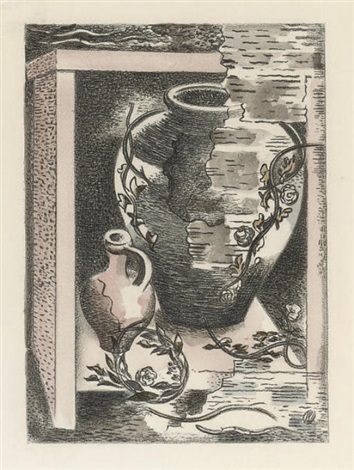
Paul Nash, Buried Urne (from Urne Buriall and The Garden of Cyrus), 1932
Collotype with pochoir
31.5 x 22.5 cm
Ομηρικό Ακρογιάλι
 Γεράσιμος Στέρης, George de Steris or Guelfo Ammon d' Este (Gerasimos Stamatelatos), Ομηρικό Ακρογιάλι.
Daphne and Laura and So Forth
He was the one who saw me
just before I changed,
before bark/fur/snow closed over
my mouth before my eyes grew eyes.
I should not have shown fear,
or so much leg.
His look of disbelief -
I didn’t mean to!
Just, her neck was so much more
fragile than I thought.
The gods don't listen to reason,
they need what they need -
that suntan line at the bottom
of the spine, those teeth like mouthwash,
that drop of sweat pearling
the upper lip -
or that's what gets said in court.
Why talk when you can whisper?
Rustle, like dried leaves.
Under the bed.
It's ugly here, but safer.
I have eight fingers
and a shell, and live in corners.
I'm free to stay up all night.
I'm working on
these ideas of my own:
venom, a web, a hat,
some last resort.
He was running,
he was asking something,
he wanted something or other
Margaret Atwood, Morning in the Burned House
Η Δάφνη και η Λάουρα, και τα λοιπά
Αυτός ήταν, που με είδε
λίγο πριν μεταμορφωθώ,
πριν ο φλοιός του δέντρου /το τρίχωμα/ το χιόνι
μου μπουκώσουν το στόμα,
πριν τα μάτια μου πετάξουν μάτια.
λίγο πριν μεταμορφωθώ,
πριν ο φλοιός του δέντρου /το τρίχωμα/ το χιόνι
μου μπουκώσουν το στόμα,
πριν τα μάτια μου πετάξουν μάτια.
Δεν έπρεπε να δείξω φόβο,
ή τόσο πολύ γάμπα.
Το άναυδο βλέμμα του —
Δεν το ήθελα!
Μόνο που ο λαιμός της
ήταν πιο λεπτός απ’ ό,τι νόμιζα.
Οι θεοί δεν ακούνε τη λογική,
θέλουν αυτό που θέλουν —
το σημάδι της ηλιοθεραπείας
στο κάτω μέρος της ράχης,
εκείνα τα δόντια σαν
αποσμητικό στόματος,
τη σταγόνα εκείνη του ιδρώτα
να στολίζει το πάνω χείλι—
ή έτσι τα περιγράφουν
στα δικαστήρια.
Γιατί ν’ ακουστείς όταν
μπορείς να ψιθυρίσεις;
Θρόισε, σαν τα ξερά φύλλα.
Κάτω απ’ το κρεβάτι.
Είναι άσχημα εδώ, αλλά πιο ασφαλές.
Έχω οκτώ δάχτυλα
κι ένα καβούκι, και ζω στις γωνίες.
Μπορώ να μείνω ξύπνια όλη νύχτα.
Επεξεργάζομαι
τις δικές μου ιδέες:
το δηλητήριο, ένα δίχτυ, ένα καπέλο.
μια τελευταία ευκαιρία.Έτρεχε εκείνος,
κάτι ρώταγε,
κάτι ήθελε.
Margaret Atwood, 2001
Saturday, June 20, 2020

Friday, June 19, 2020

Wednesday, June 17, 2020
DESTE Foundation, Project Space, Slaughterhouse, Hydra

The DESTE Foundation, as a gesture in response to the 200th commemoration of the Greek War of Independence, has decided to celebrate the 199th anniversary by commissioning Greek artist Kostis Velonis to conceive an immersive presentation of ten funerary masks of fighters of 1821 from the collection of the National Historical Museum of Athens. The exhibition will be on view in the old Hydra Slaughterhouse starting on June 27 and through November 1, 2020.
Conceived as an intense visual and corporeal experience, 199 is an emblematic memento mori. The exhibition is based on juxtapositions and unexpected associations of this special historical material in the setting of the old slaughterhouse and the distinctive topography of Hydra. Steering clear of the traits of a strictly celebratory exhibition or the conventional and moralistic approaches and ideological constructs around the subject, the artist invites viewers to re-examine their relation to the historic event and restore the role of art and artists in the social and cultural processes as well as in the re-evaluation of historical research.
If the year 1821 marks the start of modernity for Greece and its induction into the Age of Enlightenment and its contradictions, 199 explores some of the consequences and implications of this prospect, the contemporary significance of artistic representation, the allegories and memory of the bodies, as well as the questions and emotional turmoil triggered by such an historical event.
In this way, the exhibition repositions the relations between the body and history, between inner experience and collective self-knowledge, identity, and alterity, reality and imagination as well as between man and animals. As Kostis Velonis states, “the mourning of Cyparissus –whom Apollo turned into the evergreen cypress tree out of pity when Cyparissus was devastated by the loss of his beloved stag– is equated here with the loss of hundreds of animals in the Slaughterhouse and the sacrifices of fighters in the Greek War of Independence”.
And he continues: “The phantom that hovers over a rebellious Greece seems to set off from Pontikonissi, Kerkyra, which is almost the archetype for Die Toteninsel, the 1880 painting of Arnold Böcklin. The famous picture of the islet at sunset contributes to this peculiar time machine, travelling to arid Hydra and bringing some particular vegetation into the Slaughterhouse. This temporary sojourn brings together such contrasting concepts as the accessible and the inaccessible, the endless and the finite, the perishable and the eternal, paying tribute to the spectres that seek their new place.”
**Please note that due to the Covid-19 social distancing regulations, there will be no opening event for this exhibition*
DESTE Foundation Project Space, Slaughterhouse, Hydra
27.6.2020 - 1.11.2020
Daily 11:00–13:00 & 19:00–22:00
Tuesday Closed
Subscribe to:
Posts (Atom)